
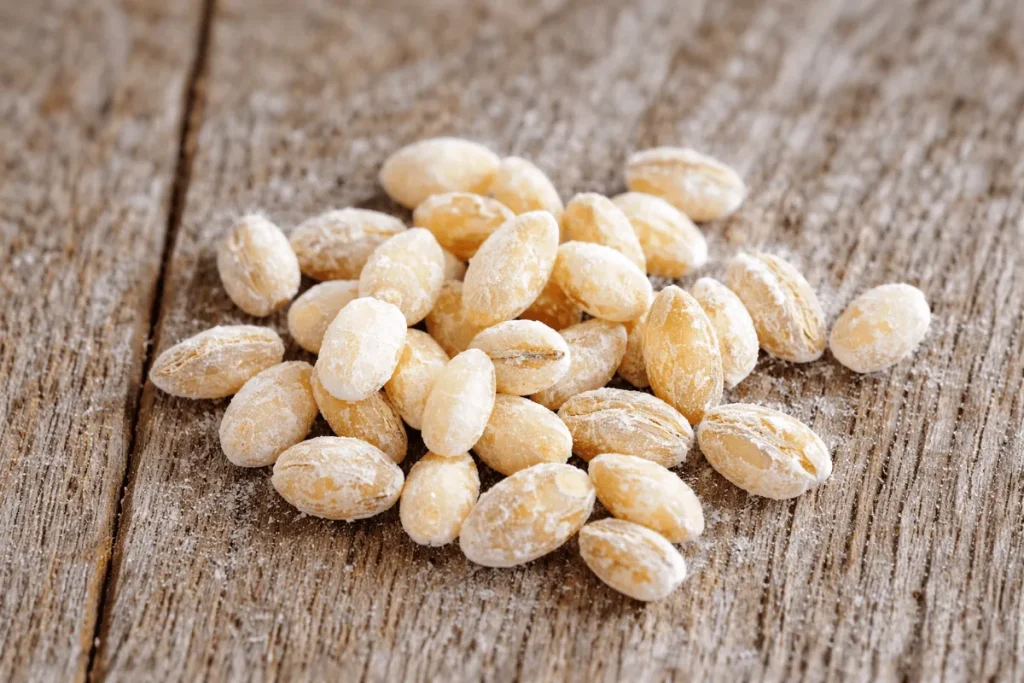
Valued at USD 22.44 billion in 2024, the Individual Quick Freezing market is rapidly becoming a backbone of the global frozen food industry.
Frozen food has changed. Storage alone is no longer enough.
Producers now need freezing methods that protect structure, improve yield, and allow flexible use. The IQF process was developed to solve exactly that problem. It freezes food quickly and individually, preventing damage before it starts.
This article breaks down how does IQF work, step by step.
What Is Individual Quick Freezing (IQF) in Food?
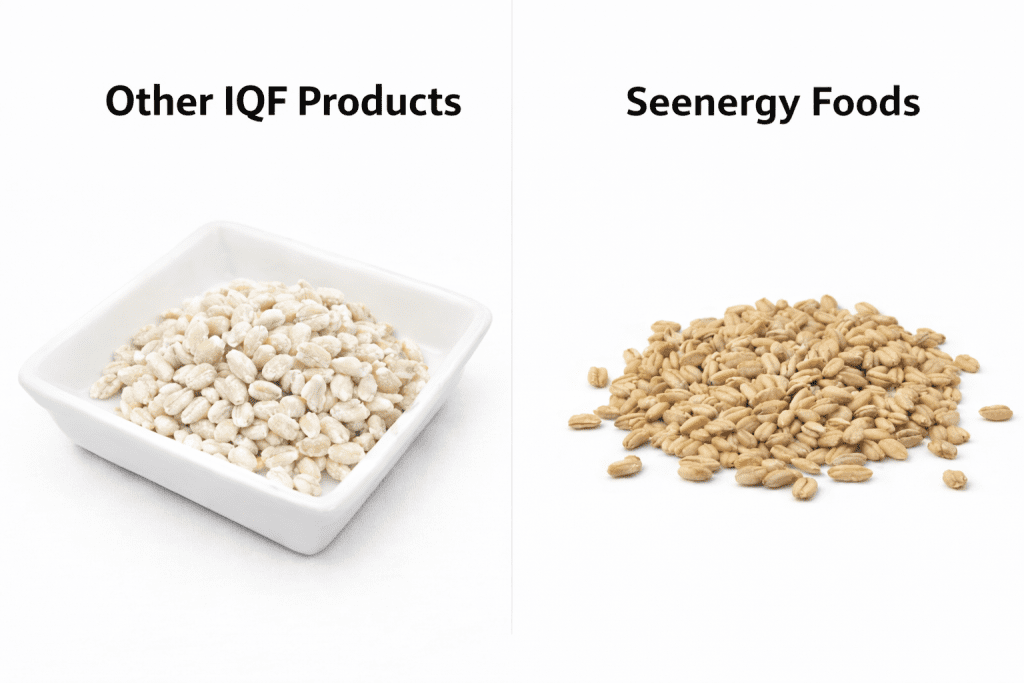
Individual Quick Freezing is a method where each piece of food freezes separately. Instead of forming a solid block, products remain loose and free-flowing throughout the freezing process.
IQF takes out the heat before big ice crystals can grow. Big crystals punch holes through cells and trash the texture. When you thaw it later, all that damaged tissue leaks juice. Keep crystals small and the cells survive mostly intact.
Individually frozen food pours easily. It portions cleanly. It mixes without breaking apart. That flexibility makes IQF food processing valuable across retail, foodservice, and industrial production.
And the benefit is clear. Better quality, easier handling, and higher usable yield with less waste.
Overview of Individual Quick Freezing (IQF) Process
The IQF process relies on two principles. Speed and separation.
Products move through freezing zones while remaining physically separated. Cold air circulates around each piece, pulling heat out evenly and quickly.
When food labels say “individually quick frozen,” it means the product froze as separate units. It was not frozen into a block and broken apart later. That distinction directly affects performance during cooking and thawing.
Traditional freezing works slowly. Freeze too slow and ice crystals get huge. They bust through cell walls like wrecking balls.
Internal structure falls apart. IQF dodges this by blasting through the danger zone temps before crystals have time to grow big.
That is why IQF exists. To protect texture, prevent clumping, and allow precise portion control.
How Does IQF Work?
IQF runs the same basic steps every time. Equipment looks different depending on who makes it but the logic behind how it works never changes.
First, products are prepared. Washing, trimming, sizing, and moisture control ensure uniform freezing behavior. Inconsistent preparation leads to uneven results.
Next comes separation. Products spread into a single layer so pieces do not touch. Contact during freezing causes clumping and surface damage.
Then rapid freezing begins. Cold air flows at controlled velocity around each piece. Heat exits quickly, locking structure in place.
Finally, the product exits fully frozen and free-flowing. That is the goal of IQF food processing.
Freeze something fast and the ice crystals stay tiny. Tiny crystals do less damage to cell walls. When you thaw the product, less liquid leaks out because the cells stayed mostly intact. That is the whole trick.
IQF Freezing Technology and Equipment
Most IQF food processing systems use fluidized bed freezers. These rely on upward airflow to gently lift and separate products while freezing occurs.
This airflow allows cold air to contact all surfaces evenly. The result is consistent freezing without clumping or deformation.
Some products require belt or tunnel IQF systems. These move items through controlled temperature zones using conveyors rather than fluidization.
Airflow design and temperature zoning matter. Poor control leads to dehydration, uneven freezing, or surface damage.
Buy the wrong freezer and your product comes out garbage no matter what you do. Different foods need different airflow patterns, belt speeds, and temperatures.
Berries freeze at one setting, diced chicken needs another. Get the match wrong and you waste money on equipment that does not work for what you actually make.
Key Benefits of IQF Freezing
Better Food Quality
The IQF process protects texture by limiting cellular damage during freezing. Smaller ice crystals preserve internal structure.
Reduced drip loss after thawing helps retain weight and appearance. Products look fresher and cook more evenly.
Color and flavor stability also improve. Rapid freezing slows enzymatic reactions that cause degradation.
So quality remains consistent from freezer to plate.
Higher Yield and Flexibility
IQF food processing reduces waste throughout production and distribution. Free-flowing products allow accurate portioning without breakage.
Mixing different ingredients becomes easier. There is no need to thaw or separate frozen blocks.
Packaging and foodservice handling improve as well. That flexibility supports higher yield and better margins.
Improved Food Safety
The IQF process moves products quickly through temperature zones where microbial growth occurs.
Consistency and control support repeatable results. That reliability strengthens food safety programs and compliance efforts.
IQF vs Traditional Freezing Methods
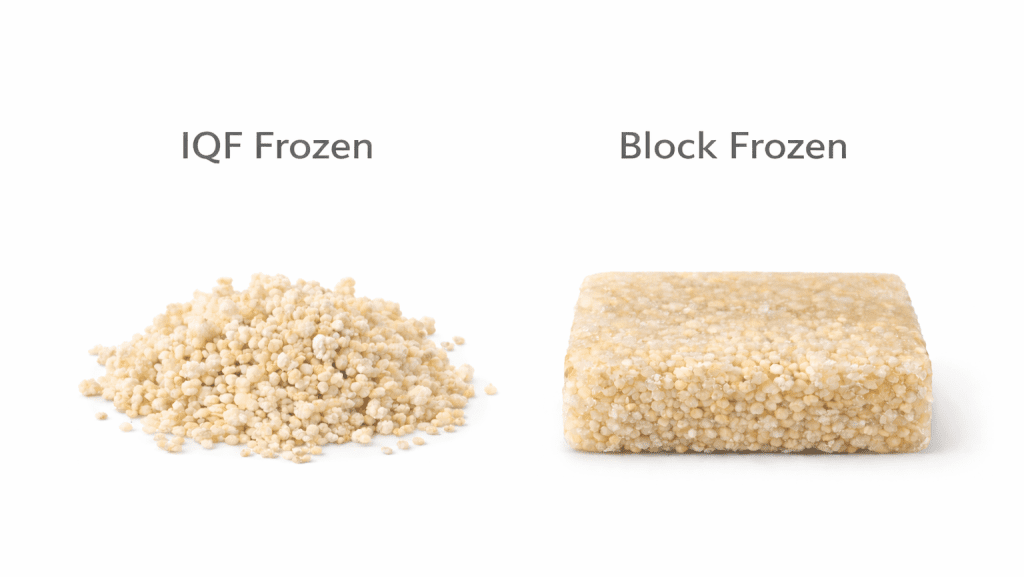
IQF vs Block Freezing
Block freezing causes products to stick together. Breaking them apart damages structure and increases waste.
IQF food processing prevents clumping from the start. Products stay intact and usable. Handling and portioning favor IQF in almost every application.
IQF vs Blast Freezing
Blast freezing cools products quickly but does not maintain separation. The IQF process is better suited for small, individual items where free-flowing output matters. Product format determines which method makes sense.
IQF vs Cryogenic Freezing
Cryogenic freezing uses liquid gases for extremely fast heat removal. Quality can be excellent, but costs are higher.
IQF rips heat away before ice has time to form big sharp crystals. Those big crystals tear cell walls apart.
Thaw the product and liquid pours out because the cells got shredded. Small crystals slip between cells without wrecking them.
Common Applications of IQF
IQF dominates categories where quality and usability matter most.
Strawberries keep their shape and color instead of turning to mush. Shrimp stays separate and the meat holds together instead of falling apart. Same with chicken. Freeze it wrong and the muscle fibers break down, making it mushy and weird when you cook it.
Grains and ready meals freeze uniformly and reheat more evenly. Bakery and dough products maintain shape and consistency.
Across categories, the reason stays the same. IQF food processing delivers separation, speed, and reliable quality.
Environmental and Cost Considerations
Modern IQF systems focus on energy efficiency. Improved airflow design reduces power consumption.
Higher yield also lowers waste, which reduces environmental impact across the supply chain.
While equipment investment is significant, total cost of ownership often favors the IQF process over time.
Challenges and Limitations of IQF
IQF food processing requires capital investment and technical expertise.
Some products with high moisture or fragile surfaces need specialized handling. Energy use remains a consideration without efficient system design.
But when applied correctly, the benefits outweigh the limitations for most operations.
The Future of IQF in Food Processing
Automation continues to improve consistency and reduce labor dependence.
Companies want greener refrigerants now. Equipment manufacturers are switching to options that do less environmental damage.
Energy efficiency matters too because running these systems costs a fortune. When buyers pick equipment, environmental impact weighs in alongside performance and price.
Demand for high-quality frozen food keeps growing. That trend secures the future of the IQF process.
Conclusion
The IQF process works because it freezes food fast, individually, and with control. That speed protects quality, improves yield, and supports safer production.
If frozen performance matters to your operation, understanding how does IQF work is essential.
Explore advanced IQF food processing solutions at Seenergy Foods.
FAQs
How does the IQF process work in food freezing?
The IQF process works by rapidly freezing individual food pieces while keeping them physically separated. Fast heat removal prevents large ice crystals from forming and protects internal structure.
What is the main goal of IQF food processing?
The goal is to freeze food quickly enough to preserve texture, prevent clumping, improve yield, and keep products free-flowing for easy portioning and handling.
Why is separation important in the IQF process?
Separation allows cold air to contact all surfaces evenly. If pieces touch during freezing, they stick together and lose the free-flow quality that defines IQF.
What equipment is used in IQF food processing?
Most IQF systems use fluidized bed freezers, tunnel freezers, or belt-based systems. The choice depends on product size, fragility, moisture level, and throughput needs.
How does IQF freezing protect food quality?
IQF freezing forms small ice crystals that cause less cellular damage. This reduces drip loss, preserves texture, and improves appearance after thawing.